
If you ask me what causes Betta fish the most stress, the answer is not food or weather, but improper water changes.
I have encountered many cases where customers messaged me after bringing their fish home:
"Hi, I just changed the water and now my fish is lying at the bottom."
Or:
"My fish was fine yesterday, but after changing the water this morning, it started clamping its fins and stopped eating."
The common factor is that most people change the water with the intention of keeping the fish cleaner, but because they do it too quickly or incorrectly, the fish experiences environmental shock.

After many years of raising and caring for fish at Ngoc Lien Aquarium Fish - LienBetta.com, I have realized that changing water is not difficult, but it requires proper technique. By changing a few simple habits, you can keep your fish healthier, reduce disease risks, and significantly lower stress levels.
Why Do Betta Fish Easily Experience Shock During Water Changes?
Although Betta fish are hardier than many other ornamental fish species, they are still highly sensitive to sudden environmental changes.
When changing water, factors such as:
- temperature;
- pH level;
- mineral content;
- chlorine concentration;
- total dissolved solids;
can cause stress if they change too quickly.
When this happens, fish may show signs such as:
- lying at the bottom;
- clamped fins;
- sluggish swimming;
- loss of appetite;
- rapid breathing.
Many people assume the fish is sick, but in reality, it may simply be experiencing water shock.
Do Not Replace All the Water at Once
This is the most common mistake I see among beginners.
Many people believe that replacing all the water will make the tank cleaner.
In reality, a 100% water change causes the environment to change too drastically.
If the fish is healthy, I usually replace only about 30–50% of the water at a time.
For small containers or cups, the amount can be adjusted, but I still try to keep some of the old water so the fish can adapt more easily.
Only in special situations, such as severe water contamination or disease treatment, would I consider larger water changes, and even then, they must be done very carefully.
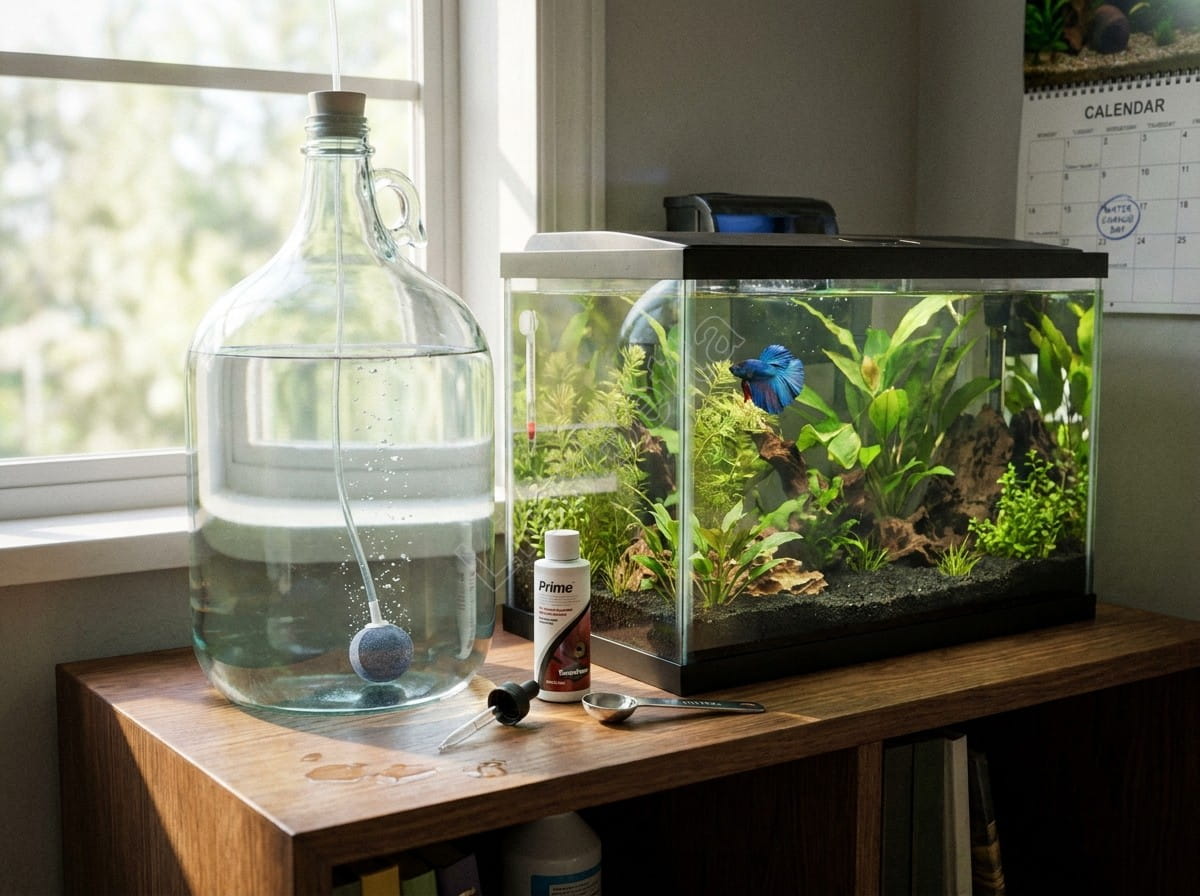
Always Prepare the Water Before Changing It
Tap water often contains chlorine or chloramine for disinfection.
If you use fresh tap water immediately, it can irritate the fish's gills.
At the farm, I always:
- store water beforehand;
- allow it to stabilize;
- use a dechlorinating solution when necessary.
I never use water directly from the tap for immediate water changes.
Keep the New Water Temperature Similar to the Old Water
This is something many people overlook.
A difference of just a few degrees Celsius can stress the fish.
During colder weather, I usually keep the new water in the same area as the fish for a while so the temperature can stabilize before use.
I pay even closer attention during the rainy season or periods of rapidly changing weather.
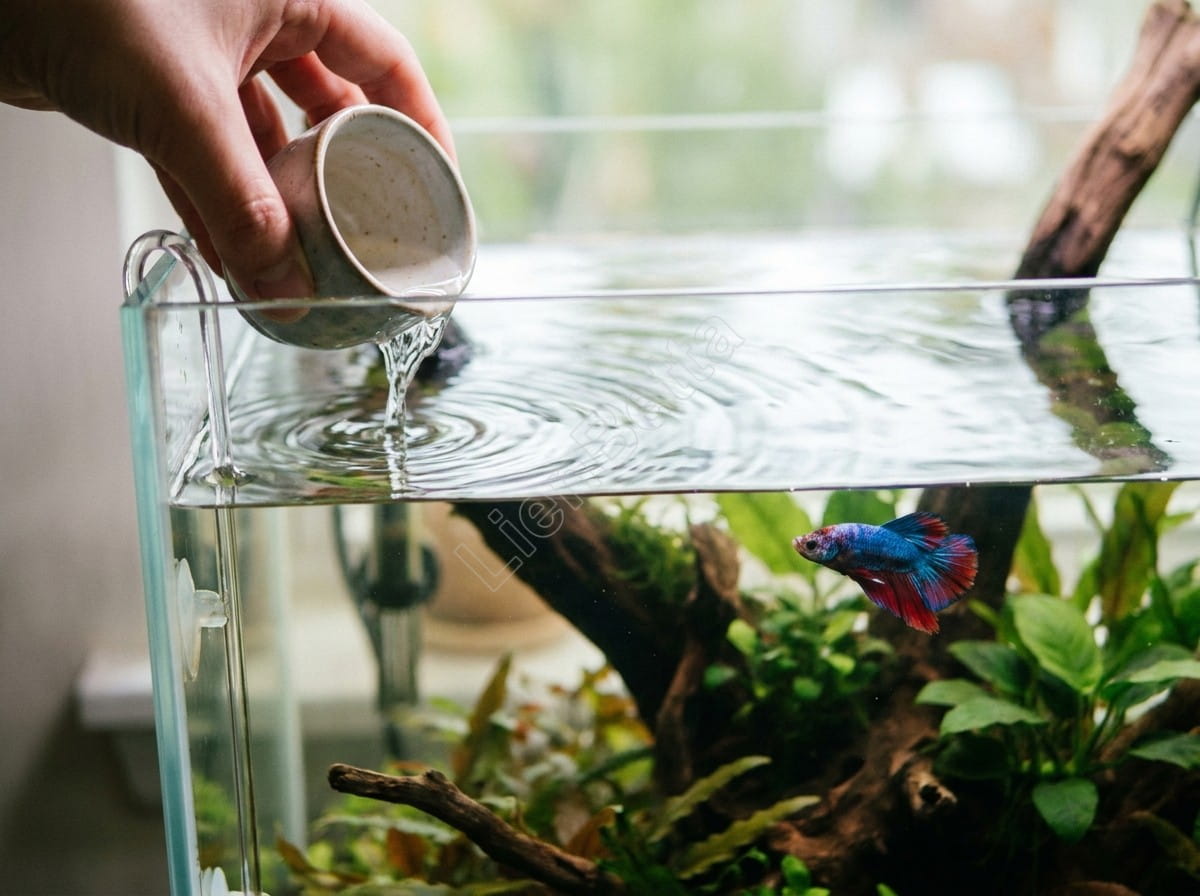
Add Water Gently
I never pour water directly onto the fish.
When adding fresh water, I usually:
- pour slowly along the side of the tank;
- use a small cup;
- or use a slow-flowing tube.
This helps prevent the fish from becoming frightened by strong water currents.
Do Not Change Water Immediately After Feeding
This is a practice I always follow.
After eating, fish need time to digest.
Changing the water immediately afterward can increase stress.
I usually perform water changes before feeding time or wait a few hours after a meal.
Observe the Fish After the Water Change
Do not change the water and walk away immediately.
The first 15–30 minutes are very important.
I usually observe whether the fish:
- is swimming normally;
- is naturally flaring its fins;
- is breathing steadily;
- responds when someone approaches.
If everything looks normal, the fish has likely adapted well.
Should You Use Indian Almond Leaves After a Water Change?
In my experience, you can, but it is not required.
Indian almond leaves can help:
- reduce stress;
- create a more natural environment;
- support recovery after water changes.
However, Indian almond leaves cannot replace clean water.
Water quality remains the most important factor.
How Often Should You Change the Water?
This depends on your setup.
If the fish is kept in a small container or an unfiltered tank, I usually change the water more frequently while replacing only a portion each time.
If the fish is kept in a larger tank with a stable filtration system, water changes can be less frequent.
Instead of following a strict schedule, I usually observe:
- whether the water remains clear;
- whether uneaten food is present;
- whether there is excessive waste at the bottom;
- whether the fish is behaving normally.
In my opinion, direct observation is always more effective than following a rigid water-change schedule.
Common Mistakes That Cause Water Shock
While advising customers, I frequently see these mistakes:
- Changing all the water at once.
- Using tap water immediately.
- Pouring water too forcefully.
- Using water that is too cold or too hot.
- Changing water immediately after transporting the fish.
- Overfeeding immediately after a water change.
- Failing to remove debris from the bottom of the tank.
Avoiding these mistakes alone can greatly reduce the risk of water shock.
My Water-Change Routine at the Farm
At Ngoc Lien Aquarium Fish - LienBetta.com, water changes are part of the daily routine.
My main focus is not changing as much water as possible, but maintaining a stable environment.
I always prepare water in advance, perform water changes gently, monitor the fish's reaction, and avoid changing too many environmental factors at once.
As a result, the fish experience less stress, maintain a strong appetite, and are less likely to develop health issues.
After many years of fishkeeping, I have learned that stability is always more important than trying to do everything quickly.
Conclusion
Knowing how to change Betta fish water without causing shock is one of the most important skills for any Betta keeper. Proper water changes can significantly reduce the risk of stress, appetite loss, and disease.
Based on my experience, always remember these basic principles: never replace all the water at once, prepare the water before use, keep the new water temperature close to the old water, add water gently, and observe the fish afterward. These simple steps may seem minor, but they make a tremendous difference.
I hope the experiences shared from my daily fish-care routine at Ngoc Lien Aquarium Fish - LienBetta.com help you feel more confident when changing water and keeping your Betta fish healthy, active, and thriving.


 Vietnamese
  English