
If you are new to keeping Betta fish, one of the things I find many people wonder about is whether to feed live food or dry food. Especially with fighting Betta fish, many people think that if they want their fish to be energetic, healthy, and have a good body shape, they must feed live food.
After many years of personally raising fish at Ngoc Lien Aquarium Fish – LienBetta.Com, I find that the answer is not simply “live food is better” or “dry food is more convenient.”
Betta fish generally enjoy live food because of their predatory instincts, but high-quality dry food can still be used as a convenient staple diet. The most important things are choosing suitable food, feeding the right amount, and maintaining a reasonable variety in the diet.
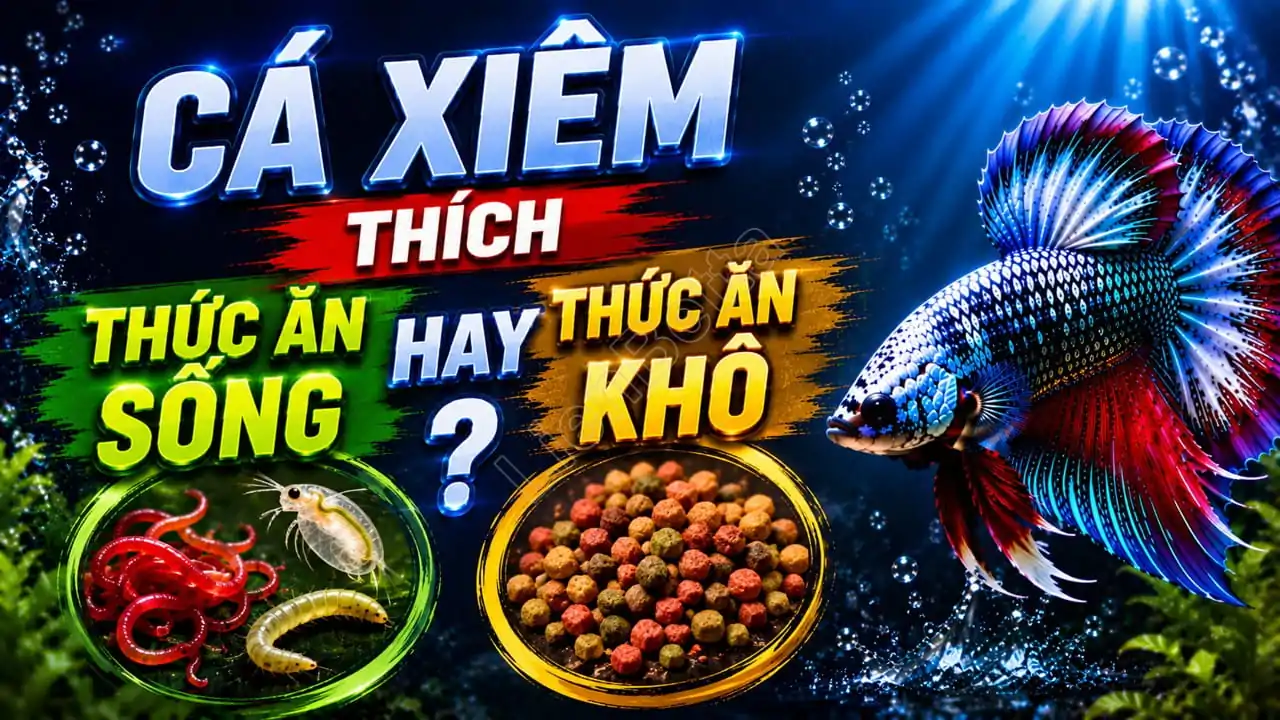
For fighting Betta fish, I especially do not recommend feeding excessive amounts just to make the fish grow faster or become more aggressive. A beautiful fish should also have a balanced body, flexible swimming ability, and good reflexes.
Do Betta Fish Prefer Live Food or Dry Food?
If we only consider how appealing the food is, I would lean toward live food.
When a small moving prey item is placed into the tank, Betta fish often immediately pay attention. They may stalk, chase, and then strike at the prey. This is a natural hunting behavior for Betta fish, so many fish appear much more excited when eating live food than dry food.
Some types of live food commonly used by Betta keepers include:
- Bloodworms.
- Artemia.
- Daphnia.
- Mosquito larvae.
- Other suitable live larvae or prey.
However, liking a food does not mean that it is always the best choice for daily feeding.
This is an important distinction for beginners to understand.
Why Do Betta Fish Like Live Food?
Betta fish are predatory fish. In their natural environment, they feed on various small organisms.
When prey moves through the water, fish can easily detect it, which stimulates their natural hunting response.
I see this very clearly in healthy fish. As soon as live food is introduced, the fish can almost immediately become much more active.
This can be especially interesting to observe with fighting Betta fish, as their quick response to prey can be one indication of their natural behavior.
However, I do not consider repeatedly making fish chase prey to be a form of “training.” If done excessively, fish can still become tired and stressed.
Does Live Food Make Betta Fish More Energetic?
It can support their physical condition, but you should not assume that feeding live food automatically makes a fish more energetic.
A fish's condition depends on many factors:
- Genetics.
- Age.
- Physical condition.
- Water quality.
- Living environment.
- Diet.
- Rest.
- Overall care provided by the keeper.
Food is only one part of the equation.
I have encountered fish that were fed large amounts of live food but still did not develop well because their diet was unbalanced or their living environment was unstable.
On the other hand, some fish raised on high-quality dry food combined with appropriate live food can also develop very well.
Advantages of Live Food
What I like most about live food is that fish are usually very interested in eating it.
In addition, some types of live food provide suitable nutritional value for Betta fish and can be useful during periods when fish need to grow or recover their physical condition.
For fry or developing fish, certain small live foods can be particularly convenient because their size can be matched to the fish's mouth.
Especially when a fish has just arrived after transportation and is reluctant to eat, moving food can sometimes stimulate feeding better than dry food.
However, live food also has disadvantages that fish keepers should not overlook.
Disadvantages of Live Food
This is why I do not recommend that beginners feed their fish exclusively live food.
Risk of Carrying Pathogens
If the source of live food is not reliable, it may introduce bacteria, parasites, or contaminants into the aquarium.
This is especially true for food collected from unknown or unclean water sources.
That is why at my farm, I always pay attention to the source of the food, rather than simply using something because the fish enjoys eating it.
Difficult to Store
Live food needs to be stored and used properly.
If it is kept for too long or stored under unsuitable conditions, its quality can deteriorate quickly.
Can Quickly Pollute the Water
If too much food is given and the fish cannot finish it, leftover food can decompose and reduce water quality.
This problem is even more noticeable in small Betta tanks.
What About Dry Food?
Dry food has one major advantage:
It is convenient and makes portion control easier.
Today, there are many pellet foods specifically formulated for Betta fish, with nutritional compositions designed for ornamental fish.
If you choose a quality product and store it properly, dry food can absolutely be used as part of a daily feeding routine.
For busy fish keepers, I find this to be a very practical option.
You simply do not have to prepare live food every day.
Can Betta Fish Stay Healthy on Dry Food?
Yes.
This is something I want beginners to understand so they do not feel that live food is mandatory.
A good diet does not depend solely on whether the food is alive or not.
What matters more is:
nutritional composition + food quality + portion size + feeding frequency.
If you purchase high-quality dry food, feed your fish an appropriate amount, and maintain stable water conditions, the fish can still develop and remain healthy.
Disadvantages of Dry Food
Dry food also has some limitations.
Fish may not be as interested in it as they are in live prey, especially if they are accustomed to moving food.
Some pellets may also be too large for the fish's mouth.
In addition, if a keeper has a habit of putting too much food into the tank, uneaten food can quickly contaminate the water.
Therefore, dry food is convenient, but that does not mean feeding more is better.
What Feeding Method Do I Prefer for Fighting Betta Fish?
If I had to choose one approach for long-term use, I would not choose either an exclusively live-food or exclusively dry-food diet.
I prefer to combine both.
High-quality dry food can serve as the foundation because it is easy to store, easy to portion, and convenient when caring for multiple fish.
Live food can be added at appropriate times to provide dietary variety and stimulate the fish's natural feeding response.
This approach is particularly suitable for people raising many fish at a farm because it is easier to control than relying entirely on live food.
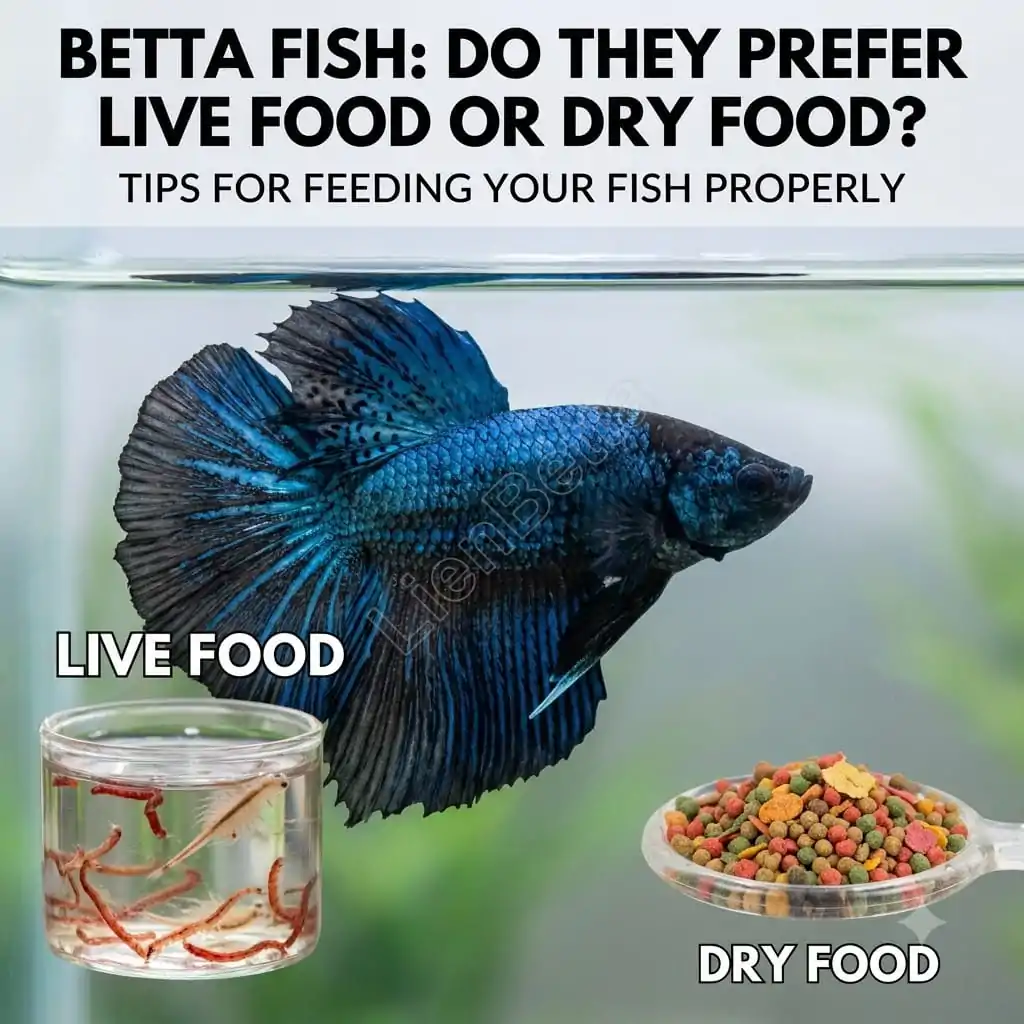
How Often Should Fighting Betta Fish Eat Live Food?
There is no fixed feeding schedule that applies to every fish.
I usually adjust the diet according to:
- Fish age.
- Size.
- Physical condition.
- Purpose of keeping.
- Type of food being used.
- Activity level.
For healthy adult fish, you do not need to feed large amounts of live food every day.
A moderate portion combined appropriately with quality dry food is usually more practical.
I prefer a balanced fish over one that is constantly being fed large amounts of food.
Can Betta Fish Eat Bloodworms?
Yes, but this is a type of food for which I pay particular attention to the source.
Bloodworms are highly appealing to many fish, but if the water in which they were raised is not clean, the hygiene risks can also be higher.
If you use them, purchase them from a reliable source and process and store them appropriately before feeding.
Do not use bloodworms from an unknown source simply because your fish enjoy eating them.
Is Artemia Good for Betta Fish?
Artemia is a fairly common food choice for raising fish, especially fry and fish that require small-sized food.
For adult Betta fish, Artemia can also be used as part of the diet.
I like Artemia because it can be prepared in a controlled manner and the feeding quantity can be adjusted relatively easily.
However, just like with any other food, there is no need to overfeed simply because the fish enjoys it.
Can You Feed Betta Fish Mosquito Larvae?
Mosquito larvae can strongly stimulate a fish's hunting response.
However, I do not recommend that beginners collect mosquito larvae from unknown or potentially contaminated water sources and put them directly into the aquarium.
Unclean food sources can introduce various risks to the fish.
If you want to use live food, I prefer food that comes from a controlled breeding or supply source.
How Can You Tell if You Are Feeding the Right Amount?
This is something I usually observe rather than trying to remember an exact number of pellets.
After feeding, observe:
- Whether the fish eats quickly.
- Whether its belly becomes excessively swollen.
- Whether there is leftover food.
- Whether the fish digests and produces waste normally.
- Whether the water becomes dirty quickly.
If food is frequently left uneaten, I reduce the portion.
Feeding the right amount is much better than overfeeding.
What Should You Feed a Newly Arrived Betta Fish?
This is a situation where I usually advise customers to be patient.
After transportation, fish may become stressed and may not eat immediately.
Do not open the shipping bag and immediately feed the fish a large amount.
Instead, prioritize:
proper acclimation → allowing the fish to rest → observation → gradually restarting feeding with a small amount.
If the fish is already accustomed to a particular food at the farm, you can continue using that food during the first few days to avoid sudden dietary changes.
Do You Need to Change Food Frequently?
Not necessarily.
I do not like the approach of feeding one type today and another type tomorrow simply because you think “the more variety, the better.”
If the current food is suitable, the fish eats it well, and its physical condition remains stable, you can continue using it.
Dietary variety can be achieved through reasonable supplementation without completely changing the feeding routine.
Common Mistakes I See Beginners Make
Some mistakes are very common:
Overfeeding because the fish seems to enjoy eating.
Betta fish can eat quite enthusiastically, which can easily make keepers think the fish is still hungry.
Feeding live food without checking its source.
This is a mistake I particularly discourage.
Leaving uneaten food in the tank.
In a small aquarium, excess food can cause water quality to deteriorate very quickly.
Thinking that fighting Betta fish must eat only live food.
This is not necessary.
Using food intended for other fish without checking its size and nutritional composition.
Betta fish have their own nutritional needs, so it is best to choose food specifically suitable for Betta fish.
So, Should You Choose Live Food or Dry Food?
If you ask me for a short answer:
Betta fish generally prefer live food, but I do not recommend feeding only live food.
If you are a beginner, I would prioritize a high-quality dry food that allows easy portion control as the staple food. You can then supplement with suitable live food when appropriate.
If you raise fighting Betta fish at a farm and can control the source of live food, combining different types of food gives you greater flexibility when caring for different groups of fish.
Conclusion
Do Betta fish prefer live food or dry food?
If we are talking purely about instinct and attractiveness, I find that Betta fish generally prefer live food. Moving prey stimulates their natural hunting response, so fish often strike at it quickly and show strong interest.
However, this does not mean dry food is inferior.
A quality food formulated for Betta fish and given in the right amount can serve as an excellent foundation for a daily diet. Live food should be used appropriately, with priority given to clean and reliable sources, and should not be overfed.
After many years of raising fish, I have come to a simple principle:
A fish enjoying its food does not necessarily mean it is being fed correctly. A healthy fish is the ultimate goal.
For the fish at Ngoc Lien Aquarium Fish – LienBetta.Com, I always prioritize a feeding routine suited to each stage of development and the individual condition of the fish, rather than trying to make the fish eat as much as possible. When portions are appropriate, water conditions are stable, and the fish gets enough rest, it can naturally show its color, health, and overall condition.


 Vietnamese
 English