
If you've kept Betta fish long enough, you've probably heard someone say, "Just add an Indian almond leaf, and the fish will recover." Some people even treat Indian almond leaves as a miracle cure that can fix everything from fungal infections and fin rot to loss of appetite.
As someone who personally raises and cares for hundreds of Bettas every month at Ngoc Lien Aquarium Fish - LienBetta.com, I can confidently say that Indian almond leaves are very beneficial for Betta fish—but they are not a cure-all.
Over the years, I've regularly used dried Indian almond leaves in specific situations. There have been times when they've helped fish recover surprisingly quickly, but there have also been cases where relying on the leaves alone only allowed the disease to become more serious.
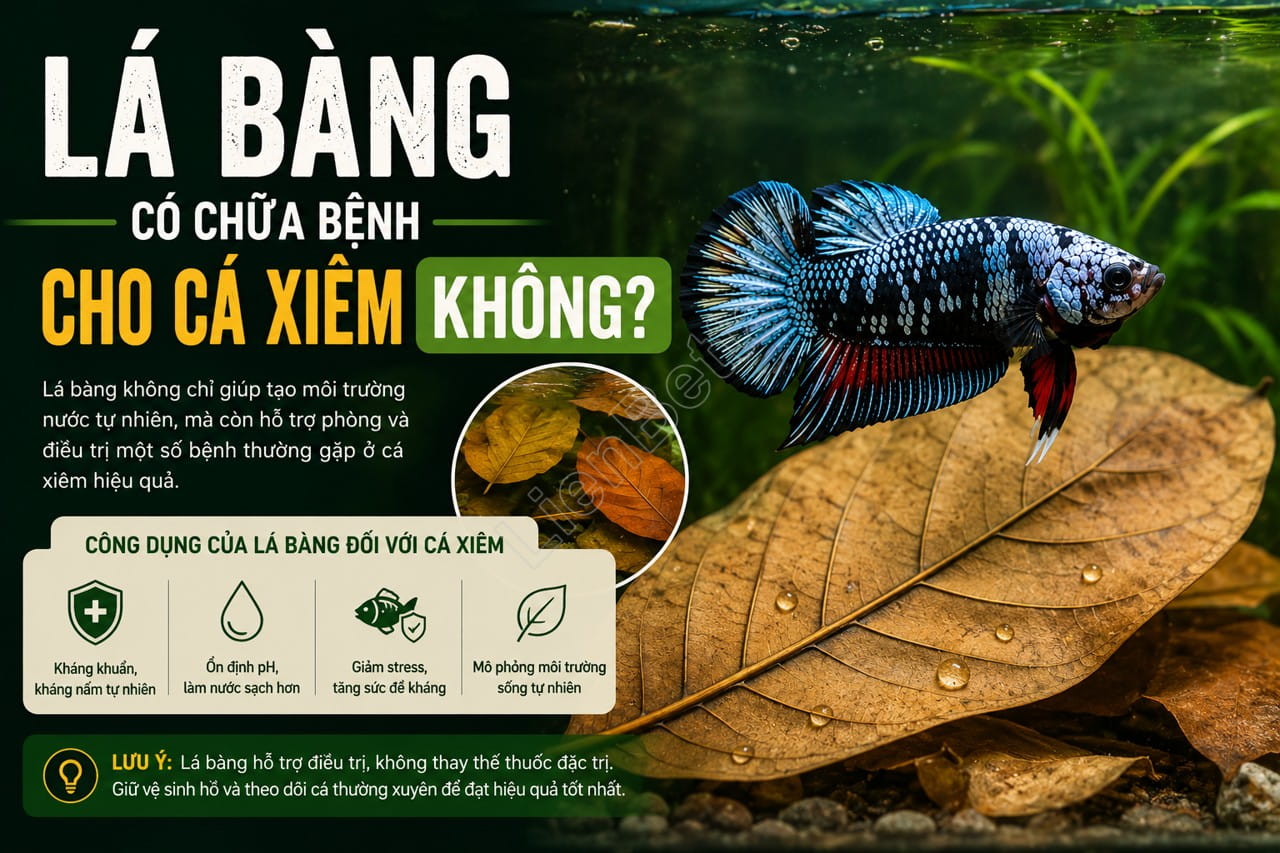
So, can Indian almond leaves actually cure Betta fish diseases? When should you use them? And when is medication necessary? Let me share my real-world experience in this article.
What Are Indian Almond Leaves and Why Do Betta Keepers Use Them?
Indian almond leaves have been widely used by Betta hobbyists for many years.
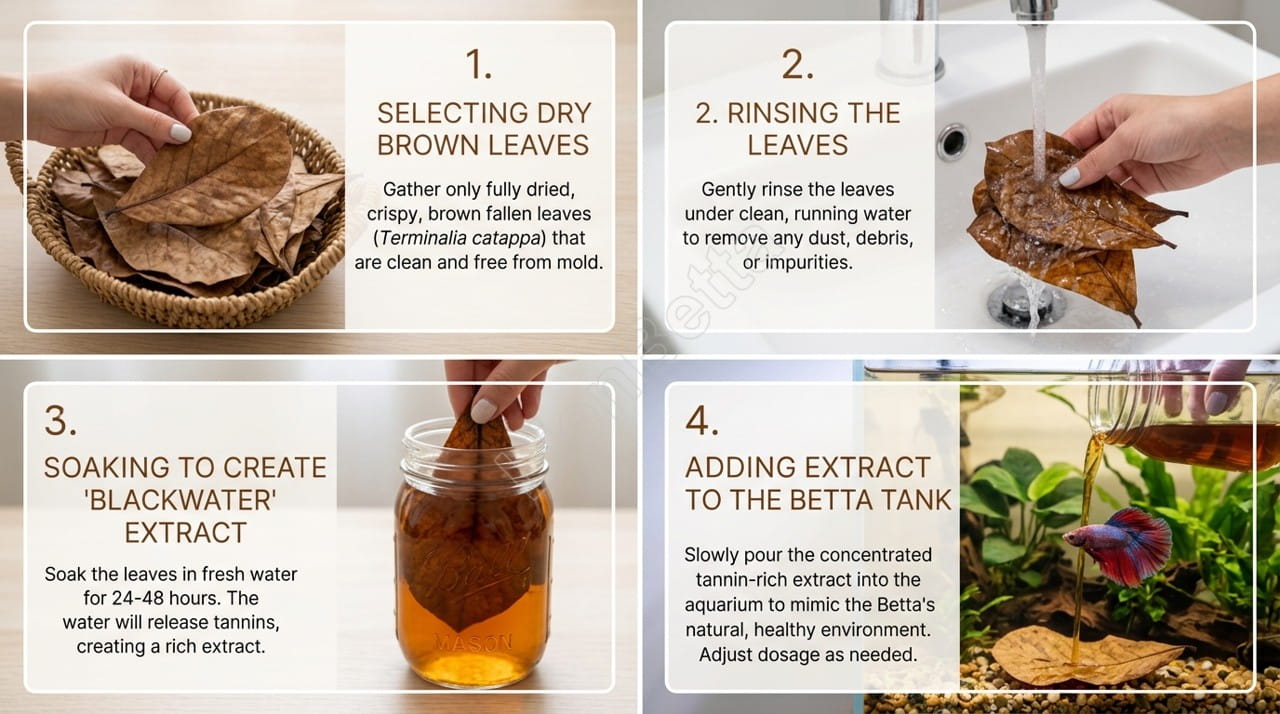
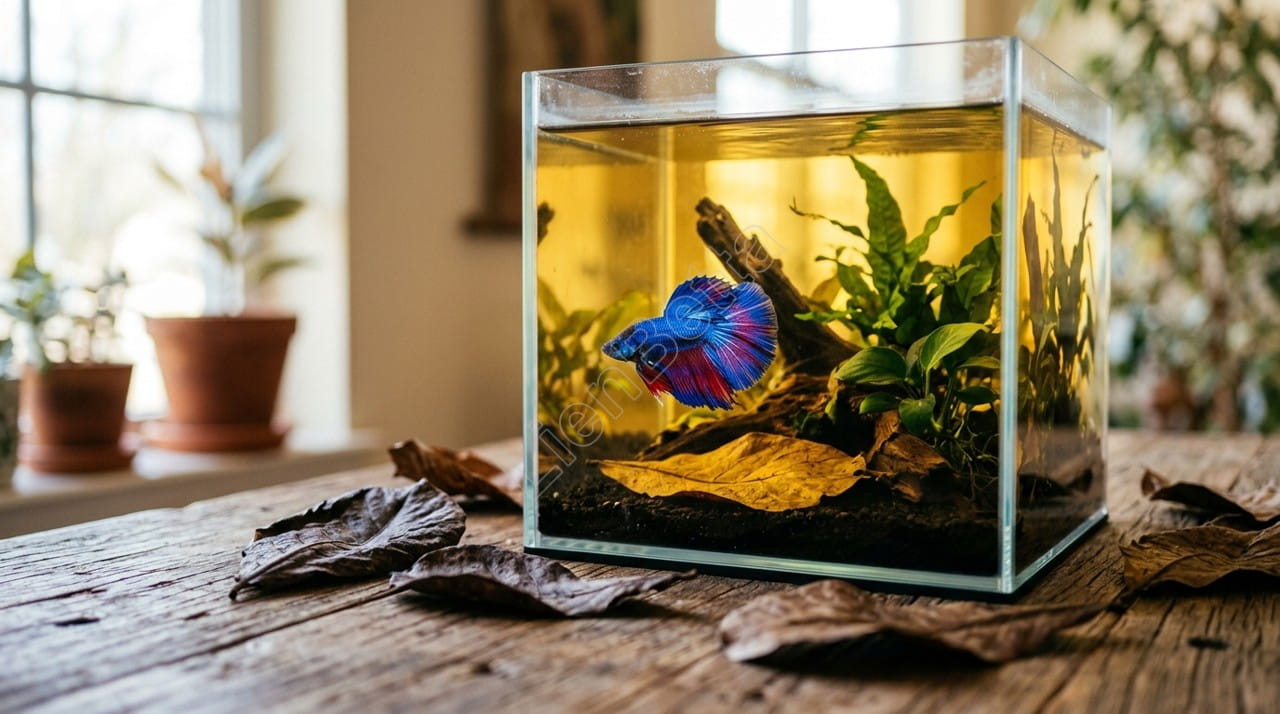
When soaked in water, the leaves release natural compounds such as tannins and organic acids, turning the water a light tea color. This closely resembles the natural blackwater habitat where wild Bettas live.
I really enjoy using Indian almond leaves because, besides creating a more natural environment, the tannin-rich water helps reduce stress after shipping or whenever a Betta is adjusting to a new home.
That's also why I always keep Indian almond leaf water prepared at my farm whenever it's needed.
Can Indian Almond Leaves Cure Betta Fish Diseases?
The answer is:
They can support recovery, but they cannot replace proper medication.
This is something I always emphasize to my customers.
Indian almond leaves cannot completely eliminate harmful bacteria, fungi, or parasites that cause disease.
What they do very well is:
- Help stabilize water conditions.
- Reduce stress.
- Support the healing process.
- Slow the growth of certain harmful bacteria in the water.
- Help fish adapt more easily after shipping.
If a Betta is only experiencing mild stress or has a few small scratches, I've found that Indian almond leaves work quite well.
However, if the fish already has severe fungal infections, advanced fin rot, pineconing, or serious bacterial infections, Indian almond leaves alone simply won't be enough.
Situations Where I Regularly Use Indian Almond Leaves
After many years of breeding Bettas, these are the situations where I almost always use them.
When a New Betta Arrives
After shipping, Bettas are often tired and stressed.
At this stage, I usually:
- Acclimate the fish carefully.
- Add a moderate amount of Indian almond leaf.
- Avoid feeding immediately.
This helps the fish stay calmer and adapt to its new environment more quickly.
After Water Changes
Some Bettas are quite sensitive to water changes.
Indian almond leaves help create a gentler environment, reducing stress after each water change.
Minor Fin Damage
Sometimes Bettas injure themselves or nip each other's fins.
If the damage is only minor, I usually:
- Keep the water extremely clean.
- Perform regular water changes.
- Add Indian almond leaves.
In most cases, the fins recover well without the need for medication.
Before Breeding
This is another time when I frequently use Indian almond leaves.
The leaf extract helps stabilize the environment while creating water conditions that are closer to the Betta's natural habitat, making breeding pairs feel less stressed.
When Are Indian Almond Leaves No Longer Effective?
This is something many beginners misunderstand.
I've had customers message me saying,
"I've been using Indian almond leaves for a week, but my Betta still isn't getting better."
When I looked at photos of the fish, I found that it already had:
- Severe fin rot.
- White fungal growth.
- Refused food for several days.
- Swollen, inflamed gills.
In situations like these, Indian almond leaves only provide supportive care.
To save the fish, you first need to identify the actual cause of the illness and choose the appropriate treatment.
If you simply continue replacing the leaves without treating the underlying disease, the chances of recovery become much lower.
Should You Use a Large Amount of Indian Almond Leaves?
In my opinion, no.
Many people believe that the more leaves they add, the better.
This is a very common misconception.
Using too many leaves can:
- Make the water excessively dark.
- Increase the amount of organic matter.
- Cause the water to become dirty more quickly if it isn't changed regularly.
- Reduce overall water quality.
I usually add just enough leaves to produce a light tea-colored tint.
Clean water is still the most important factor.
Are Fresh or Dried Indian Almond Leaves Better?
I always prefer naturally fallen, dried Indian almond leaves.
I don't recommend using fresh green leaves.
Fresh leaves still contain sap and unstable compounds.
Before using them, I usually:
- Choose clean leaves.
- Rinse them gently.
- Pour boiling water over them.
- Allow them to cool before placing them in the aquarium.
This helps remove dust and reduces the chance of introducing unwanted contaminants into the tank.
Can Indian Almond Leaves Replace Water Changes?
Absolutely not.
This is another mistake I see quite often.
Some people believe that once Indian almond leaves are added, frequent water changes are no longer necessary.
In reality, the most common causes of disease are still:
- Dirty water.
- Leftover food.
- Elevated ammonia levels.
- Improper water change routines.
Whether you use Indian almond leaves or any other water conditioner, maintaining clean water remains the single most important part of Betta care.
A Few Tips for Using Indian Almond Leaves
Over the years, I've learned a few simple rules:
- Never use moldy leaves.
- Avoid leaves exposed to pesticides.
- Don't leave decomposing leaves in the tank for too long.
- Watch how your fish responds after adding the leaves.
- Continue performing regular water changes.
Following these practices will help you get the most benefit from Indian almond leaves.
My Experience After Many Years of Using Indian Almond Leaves
If you ask whether I regularly use Indian almond leaves, my answer is yes.
But I've never considered them to be medicine.
To me, Indian almond leaves are more like a helpful assistant that improves water quality, reduces stress, and creates conditions that allow Bettas to recover more effectively.
When a fish is clearly sick, I always identify the cause first before deciding whether medication is necessary.
Keeping fish is like caring for any living creature. There is no single solution that works in every situation.
Conclusion
So, can Indian almond leaves cure Betta fish diseases?
The answer is that they can support recovery, but they cannot replace proper medication.
If your Betta is experiencing mild stress, small fin injuries, or simply needs a more stable environment, Indian almond leaves are an excellent choice. However, for serious conditions such as fungal infections, fin rot, pineconing, or bacterial diseases, you should identify the root cause and choose the appropriate treatment instead of relying solely on the leaves.
At Ngoc Lien Aquarium Fish - LienBetta.com, I continue using Indian almond leaves as part of my daily Betta care because of the many benefits they provide. Even so, I always remind my customers that Indian almond leaves are most effective when combined with clean water, proper care, and regular health monitoring.
I hope these real-life experiences help you better understand what Indian almond leaves can—and cannot—do, so you can keep your Betta healthy for years to come.


 Vietnamese
  English